

Measured your blood pressure at home and now you’re not sure what to believe?
If you’re wondering when to trust a home blood pressure reading — and when not to, you’re not alone. Therefore, this guide is here to stop the panic and, more importantly, give you clear, calm steps to understand what your numbers really mean.

This post may contain affiliate links. If you click and buy, we may earn a commission at no extra cost to you. Thank you for supporting SmartHealthTechHub.
1️⃣ When a Home Blood Pressure Reading Doesn’t Feel Right
1.1 The Scene
First, you sit down at home.
Then, you wrap the cuff around your arm.
Next, you press the button.
The machine inflates.
After that, the number appears.
However, it doesn’t feel right.
As a result, your heart rate rises — after the reading.
You weren’t worried before you measured. Now, you are.
Importantly, this moment is far more common than people admit. Moreover, it is usually the starting point of unnecessary anxiety.
1.2 The Double-Check Trap
What most people do next is very predictable:
- First, you measure again immediately
- Then, the second number is different
- As a result, confusion turns into worry
- Finally, the third reading is even higher

Consequently, you’re now googling at night, wondering if something is wrong.
Here’s the calm truth:
- Re-measuring too fast often raises blood pressure
- Additionally, anxiety tightens blood vessels
- Therefore, confusion ≠ danger
In other words, your body is reacting to stress — not necessarily illness.
1.3 Authority Positioning (My Voice)
Over the years, I’ve measured blood pressure in busy hospital corridors.
At the same time, I’ve also measured it in quiet living rooms.
Because of that experience, I can tell you this:
The machine isn’t always wrong — however, neither is your anxiety.
What truly matters, therefore, is knowing when to trust the number and, on the other hand, when to question the setup instead.
That’s exactly what this guide gives you.
2️⃣ When to Trust a Home Blood Pressure Reading: One Number vs Patterns
At its core, blood pressure is data, not a verdict.
- Single readings fluctuate naturally
- Additionally, stress, posture, timing, and breathing all matter
- Therefore, interpretation matters more than the number itself
In short:
One number means very little.
However, repeated patterns mean something.

This aligns with guidance from the American Heart Association, which explains that blood pressure naturally changes throughout the day depending on activity, posture, and stress:
https://www.heart.org/en/health-topics/high-blood-pressure/why-blood-pressure-numbers-change
If you’ve ever panicked over a single low or unusual number, you may find this helpful:
👉 Is 97/66 blood pressure normal?
This principle, consequently, governs everything below.
3️⃣ 🚩 When Not to Trust a Home Blood Pressure Reading (Red Flags)
Most “bad” readings come from setup issues — not broken hearts and not broken devices.
3.1 🔋 Low Battery: A Common Reason Home Blood Pressure Readings Are Inaccurate
Many people don’t realize this; however, it’s important:
- Accuracy often drifts before a monitor shuts down
- Meanwhile, the screen still works → creating false confidence
For example, I’ve personally seen monitors act “strange” for days before showing a low-battery warning.
👉 Therefore, if numbers suddenly feel “off,” check the battery first.
3.2 🧥 Cold Cuff or Lazy Placement
This detail matters more than people think.
For instance, common shortcuts include:
- A cuff stored in a cold room
- A cuff wrapped over clothing
- A cuff placed too quickly
Cold cuffs become stiff. Consequently, stiff cuffs don’t compress evenly.
When the squeeze is uneven, the machine has to guess. As a result, strange numbers appear.
Importantly, this is lived experience — not theory.
3.3 🪑 Body Position Errors That Affect Home Blood Pressure Readings
In clinics:
- Feet flat
- Back supported
- Arm positioned before pressing start
At home, however:
- Couch or bed
- Crossed legs
- Arm hanging down
No jargon is needed here:
- Arm below heart level → falsely higher reading
- Dangling or crossed legs → unstable pressure
Therefore, posture errors explain many “random” readings.
3.4 🩹 Cuff Size & Position — The Most Overlooked Accuracy Killer
This issue is quiet.
However, it causes more bad readings than most people realize.
❗ Cuff Size Matters More Than You Think

Blood pressure cuffs are not one-size-fits-all.
- Too small:
The cuff has to squeeze harder; therefore, readings look artificially high - Too large:
The pressure spreads unevenly; consequently, readings may look falsely low or unstable
This is why clinics always check arm circumference first. However, home users often don’t.
👉 Therefore, if your cuff feels tight before inflation — or loose even when fully wrapped — trust the fit problem before trusting the number.

- ADJUSTABLE CUFF - Blood pressure monitor cuff suit...
- COMPATIBLE DESIGN - Blood pressure cuff upper arm comes...
- DURABLE MATERIAL - Extra large blood pressure cuff...
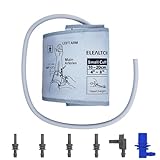
- 【Child Extra Small Cuff】Our blood pressure monitor...
- 【Compatibility Design】The replacement Child cuff is...
- 【Material】Blood pressure arm cuff using nylon cuff...
📍 Cuff Position — Where the Hose Sits Actually Matters
Most modern home monitors use an oscillometric technique — a method that detects pressure waves created by blood flow in the artery:
https://pmc.ncbi.nlm.nih.gov/articles/PMC7481457/

This arrow indicates where the cuff should align with the artery — a detail often overlooked at home.
In simple terms:
- First, the machine listens to tiny pressure waves
- Next, those waves come from blood flowing through your artery
- Therefore, the cuff must be positioned to “hear” them clearly
That’s why you’ll see a marking on most cuffs.
Correct position includes:
- Cuff wrapped on bare skin
- Lower edge about 1–2 cm above the elbow crease
- Air hose aligned over the inner arm, where the artery runs
(Some 360° cuffs are more forgiving — always check your manual.)
If the hose is rotated too far:
- The pressure waves weaken
- Consequently, the device has to guess more
- As a result, accuracy drops
Clinically, cuffs are aligned with the arterial line direction.
At home, therefore, this small alignment step makes a big difference.
This is also why proper validation matters, not just branding.
If you want a deeper explanation, see:
👉 What clinically validated really means
🎯 Arm Height = Arterial Level
One final precision point:
For accurate measurement, your cuff should sit roughly at the same height as your heart.
Why?
- If the cuff is lower → gravity increases measured pressure
- If it’s higher → readings may appear lower
That’s why resting your arm on a table or armrest is not optional. Instead, it’s part of the measurement itself.
Bottom line:
If your numbers feel “off,” check:
- Cuff size
- Cuff position
- Arm height
Before assuming something is wrong with you.
4️⃣ ✅ When to Trust a Home Blood Pressure Reading (Green Flags)
Sometimes, the number isn’t lying — instead, it’s informing.
4.1 Consistency Beats Comfort
Trust the reading when you see:
- 3 readings
- 2 minutes apart
- Similar numbers
Reframe the fear:
- One strange number = noise
- However, repeated patterns = information


- Paul, Eden (Author)
- English (Publication Language)
- 100 Pages - 07/20/2025 (Publication Date...
4.2 Familiar Physical Signals (Correlation, Not Diagnosis)
Some people notice personal patterns, such as:
- Head pressure
- Neck tension
- A familiar heavy feeling
This is not diagnosis. Instead, it’s awareness.
Therefore, patterns matter more than isolated sensations.
4.3 🌅 The Morning Surge Pattern
Many people see:
- Higher BP early in the morning
- Normal readings later
Key reassurance:
High at 7 AM + normal at 10 AM = pattern, not malfunction.
5️⃣ ⭐ How to Check If Your Home Blood Pressure Reading Is Accurate
Before you doubt yourself — test the system.

5.1 ✅ Quick Setup Checklist
Before pressing start:
- 🔋 Fresh battery
- 💪 Bare arm
- 🦶 Feet flat
- 🪑 Back supported
- ❤️ Arm at chest height
- 🌬️ One slow breath
This checklist closely follows how the American Heart Association recommends measuring blood pressure at home:
As a result, user-error noise drops immediately.
5.2 👨👩👧 The Family Check Test
Measure someone else at home with known normal BP.
If their reading looks reasonable:
👉 The device is likely fine.
👉 Therefore, the number on you deserves attention — not dismissal.
This simple step, consequently, stops panic fast.
5.3 🩺 The Clinic Bring-Along Test (Gold Standard)
Bring your home monitor to your doctor visit.
Then, compare it side-by-side with a manual reading.
This is the gold standard way doctors verify home monitors.
If you’re curious which devices tend to match clinic readings best, see:
👉 Most accurate blood pressure monitors
6️⃣ Product Nuance — Why Some Monitors Feel More Trustworthy
Trust issues usually come from fit — not technology.
Because of that, monitors with forgiving cuffs and behavior-correcting features often feel calmer to use.
For a broader overview, you may also like:
👉 Best blood pressure monitors for home use
6.1 Why Certain Monitors Reduce Anxiety
I generally trust monitors with:
- Forgiving cuff design
- Built-in behavior correction
- Fewer chances for user error
Therefore, some brands quietly stand out — not because of hype, but because they reduce mistakes before they happen.
7️⃣ 🩸 Trusted Home Blood Pressure Monitors (2025) — Why They Stop Panic
These aren’t “top sellers.”
Instead, these are monitors that remove the exact anxieties described above.
If you want a deeper model-by-model breakdown, see:
👉 Omron blood pressure monitor comparison
⭐ Omron Platinum
Why I trust it:
It automatically takes three readings and averages them.
This forces the “Green Flag” rule — you cannot obsess over a single bad number.
Why it stops panic:
It removes the temptation to re-measure five times in five minutes.

- CONFIDENCE IN EVERY READING: Monitor your heart health...
- SAFEGUARD YOUR HEART: Screen for unusual heart rhythms...
- START YOUR DAY WITH CONFIDENCE: Check for morning blood...

⭐ Omron Gold Series
The cuff advantage:
Uses the rigid ComFit cuff that snaps into place.
Why this matters:
It removes 90% of the “Is this too loose?” anxiety.
You almost can’t wrap it incorrectly.

- CONFIDENCE IN EVERY READING: Monitor your heart health...
- SAFEGUARD YOUR HEART: Detect heartbeat irregularities...
- START YOUR DAY WITH CONFIDENCE: Check for morning blood...
⭐ Withings BPM Connect
Why it works for calm users:
Automatic syncing means fewer screen-staring moments.
Important caveat:
Great if you follow setup rules. Less forgiving if you rush.
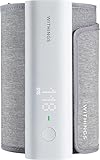
- QUICK & EAST TO READ RESULTS with color-coded feedback...
- ONE OF THE MOST ACCURATE BLOOD PRESSURE MONITORS - FDA...
- WI-FI & BLUETOOTH SYNC - The bp monitor for the arm...
⭐ A&D Medical Upper Arm Monitor
Why clinicians trust it:
No distractions. No apps. Just consistent readings.
Best for:
People who want clinic-style measurement at home.
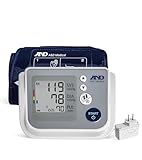
- MULTI-USER BLOOD PRESSURE MONITOR FOR HOME USE: The...
- WIDE RANGE BLOOD PRESSURE CUFF: Your cuff size matters...
- USER-FRIENDLY: Simple one-button operation provides...
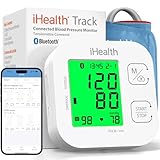
⭐ iHealth Track Pro
Why it’s acceptable:
Simple, affordable, and accurate when used correctly.
Best for:
Budget users who follow the checklist carefully.

- HD Screen for Clear Readings: Features a...
- One-Touch Operation: Fully automatic with just one...
- Dual Power Options for Flexibility...
8️⃣ Final Reframe — Blood Pressure Is a Trend, Not a Test
- One high number doesn’t define you
- A week of consistent readings = useful information
- Logging beats obsessing
Blood pressure isn’t something you pass or fail — it’s something you learn to read.
Measure calmly.
Log consistently.
Act thoughtfully — not urgently.


🔗 Related Reading
- Omron Platinum BP5465 vs BP5450 : Which One Should You Buy?
- Clinically Tested: The 5 Most Accurate BP Monitors I Trust in 2026
- Best Blood Pressure Smartwatches
- Best Wearable Health Trackers
- Is 97/66 Blood Pressure Too Low?
FAQs When to Trust a Home Blood Pressure Reading (And When Not To) 2026
When should I trust a home blood pressure reading?
You should trust a home blood pressure reading when it is taken with proper setup and shows consistent results over multiple measurements. Three readings taken two minutes apart with similar numbers are more meaningful than a single isolated reading.
Why does my blood pressure reading change every time I measure?
Blood pressure naturally fluctuates due to stress, posture, breathing, movement, and timing. Measuring too quickly, feeling anxious, or changing body position can cause noticeable differences between readings.
Is it normal for blood pressure to be higher after checking it multiple times?
Yes. Repeated measurements taken too close together can increase anxiety and temporarily raise blood pressure. Resting quietly for at least two minutes between readings helps prevent this effect.
Can cuff size affect blood pressure accuracy?
Absolutely. Using a cuff that is too small can cause readings to appear falsely high, while a cuff that is too large may produce unstable or falsely low results. The cuff’s index line should fall within the marked size range for accurate measurement.
Does cuff position really matter when measuring blood pressure?
Yes. The cuff must align with the artery on the inner arm so the monitor can detect blood flow correctly. Incorrect hose or artery alignment can weaken pressure signals and reduce accuracy.
Should my arm be at heart level when measuring blood pressure?
Yes. Your arm should rest at approximately heart level. If the cuff is below heart level, readings may appear higher; if it is above heart level, readings may appear lower.
Is a single unusual blood pressure reading dangerous?
Not usually. One unusual reading is often caused by measurement error, stress, or timing. Patterns over several days are more important than a single number unless readings are extremely high or accompanied by symptoms.

I’ve collected the most beginner-friendly tools and guides to help you get started.
Click below to begin your journey toward smarter health.
Latest Posts
-

When to Trust a Home Blood Pressure Reading (And When Not To)
-
Why I Donated My First Affiliate Income
-

seca mBCA (Medical Body Composition Analysis): Clinical-Grade Body Composition for Hospital Workflows
-

Most Reliable Glucose Test Strips for Diabetes (2026 Review)
-

Omron Platinum BP5465 vs BP5450 (2025): Which One Should You Buy?
-

🎁 Giftable Health Devices 2025: Smart Wellness Gifts That Actually Help People You Love
-

🎧 How I Relax My Mind: The Power of Listening -$0.99 for 3 Months (2025)
-

Best Pulse Oximeters in 2025 (Tested & Trusted Brands)
-

Nose Cleansing for Beginners: My Honest Experience (And Why It Feels So Good)
-

🥦 Steam Vegetables for Weight Control: My Real Routine That Works (2025 Guide)
-

Best Diabetes Shoes for Men and Women in 2025: Walk Pain-Free with Confidence and Protection
-

Best Blood Pressure Smartwatches 2025: Lab-Tested Accuracy, Pros & Cons, and Top Deals ❤️
-

Omron Blood Pressure Monitor Comparison 2025 – Top 5 Models & Buying Guide.
-

Best Smart Health Devices for Cough & Cold Relief in 2025
-

Omron Platinum(BP5465) vs Gold(BP5360) (2025): Which Blood Pressure Monitor Should You Buy?